Picture this. It is a hot Plano afternoon, and you are backing out for school pickup or work. You press the wall button, and your garage door groans halfway up, then freezes. You try the remote again. Nothing. You pull the emergency release, and the door still feels like it weighs a truck. Moments like this are exactly why Garage door troubleshooting matters. When the simple tricks do not fix the issue, knowing what to look for can save your time, protect your home, and keep your family safe.
Our technicians at Rayburn Garage Doors Co. have seen every kind of problem, from a small sensor misalignment to major track damage caused by a car bump in a parking garage. One situation that still stands out involved a homeowner near TX 121 who tried a basic reset after a storm. The opener lights blinked, the door moved two inches, and then slammed shut. The real issue was not the opener at all. A torsion spring had snapped, and the door was fighting gravity every second it moved. Basic fixes could not help because the system was no longer balanced. That job turned into a full safety inspection, a spring replacement, and a tune-up that restored smooth operation.
Here is a quick fact that surprises many homeowners. Most garage doors weigh between 130 and 350 pounds, depending on size and insulation. They feel light only because springs do most of the lifting. When a spring, cable, or track fails, the full weight comes back into play, which is why advanced troubleshooting is not just about convenience. It is about preventing injuries, property damage, and costly repairs later.
Understanding How a Garage Door System Really Works
Before jumping into deeper Garage door troubleshooting, it helps to understand what you are dealing with. A garage door is not one machine. It is a team of parts working together like members of a community. Think of a thriving forum where each member has a role. If one part is out of line, the whole system struggles.
Key parts include:
- Springs. These are the muscles. Torsion springs sit above the door, while extension springs run along the sides. They store energy and lift the door. A broken spring is like losing half your lifting power.
- Cables. These connect the bottom corners of the door to the spring system. They hold tension and guide the door.
- Tracks and rollers. Tracks guide the door, and rollers help it glide. Bent tracks or worn rollers cause sticking, shaking, or loud noises.
- Opener and drive system. The opener is the motor, and the chain, belt, or screw drive is the connection that pushes or pulls the door.
- Sensors and safety devices. Photo eye sensors stop the door if something is in the way. They prevent injuries and damage.
- Panels and hinges. They shape the door and hold it together. Cracked panels or loose hinges can throw off alignment.
When any of these parts fail, your door can act strangely. It may stop, reverse, grind, or shake. Basic fixes like changing batteries or cleaning sensors only work when the problem is small. Advanced troubleshooting starts when you notice signs that point to deeper mechanical or electrical trouble.
Safety First Before Any Advanced Troubleshooting
We want to be clear. There are fixes you can safely check. But some repairs should always be handled by trained technicians. Springs and cables are under high tension. If they snap while you are working, they can cause serious injury.
Here is your safe preparation list:
- Disconnect power. Unplug the opener or flip the breaker.
- Use locking pliers. Clamp them on the track to stop the door from moving suddenly.
- Wear eye protection and gloves.
- Keep kids and pets away.
- Use a sturdy ladder. Do not stand on a sawhorse unless it is rated for your weight and properly placed.
If you see a broken torsion spring, a hanging cable, or a door that is crooked in the track, stop. Call for professional service. This is not a time for guessing.
Symptom-Based Garage Door Troubleshooting
Advanced troubleshooting starts with the symptom. The door is giving you clues. Let us break down the most common symptoms and what they usually mean.
The Door Will Not Open at All
Possible causes:
- Power issue. Check the outlet and breaker. If the opener has no lights or sound, it may not be getting power.
- Opener logic board failure. If power is on but the opener is dead, the board may be damaged. Electrical surges after storms in Plano can cause this.
- Broken spring. If the opener hums but the door does not move, check above the door for a spring gap.
- Locked door. Some doors have a manual lock that can be bumped accidentally.
What you can do:
- Confirm power at the outlet.
- Try the wall button, not just the remote.
- Look for a broken spring or slack cable.
- What needs a pro:
- Board replacement and spring repair.
The Door Starts to Open Then Stops
Possible causes:
- Door is too heavy. Springs have lost tension, or one is broken.
- Track obstruction. A small pebble or ice buildup can stop rollers.
- Rollers are worn out. Worn rollers bind in the track.
- Opener force settings are wrong. The opener is sensing resistance.
What you can do:
- Inspect tracks for debris.
- Lubricate rollers and hinges with garage door lube.
- Try a manual lift. If it feels heavy, springs are likely the real issue.
What needs a pro:
- Spring adjustment or replacement.
- Roller swap and track realignment.
The Door Reverses Before Closing
Possible causes:
- Photo eye sensors blocked or misaligned.
- Travel limit settings are off.
- The damaged bottom seal is catching on the uneven floor.
Warped door panels. This can happen with heat exposure in high desert climates, but we see it here, too, in hot Texas summers.
What you can do:
- Clean sensors and align them.
- Check if both sensor lights are steady.
- Inspect the bottom seal for bunching.
- What needs a pro:
- Limit recalibration and panel repair.
The Door Is Crooked or Shaking
Possible causes:
- Cable off the drum.
- Track bent.
- Loose hinges.
- Uneven spring tension.
This is similar to a classic building code warning. If the structure is uneven, it stresses everything else. Just like pedestrian door size must meet code min and max for safe access, garage doors need correct alignment to travel safely.
What you can do:
- Stop using the door.
- Check for visible cable slack.
What needs a pro:
Cable reset, track repair, tension balancing.
Loud Noises, Grinding, or Popping
Possible causes:
- Dry rollers or hinges.
- Loose hardware.
- Cracked torsion spring coil.
- Opener chain too loose.
- What you can do:
- Lubricate moving parts.
- Tighten visible bolts with caution.
- Listen for the location of the noise.
What needs a pro:
Spring replacement, full tune-up, drive adjustment.
Deeper Mechanical Checks When Basic Fixes Fail
When the symptoms point to mechanics, there are a few advanced checks that help confirm the cause.
Check Door Balance
Disconnect the opener by pulling the red emergency cord. Lift the door halfway by hand and release.
- A balanced door stays in place.
- If it drops, the springs are weak.
- If it rises, the springs are too tight.
This test is like a code knowledge check for your door. It tells you if the spring system is working correctly.
Inspect Springs Close Up
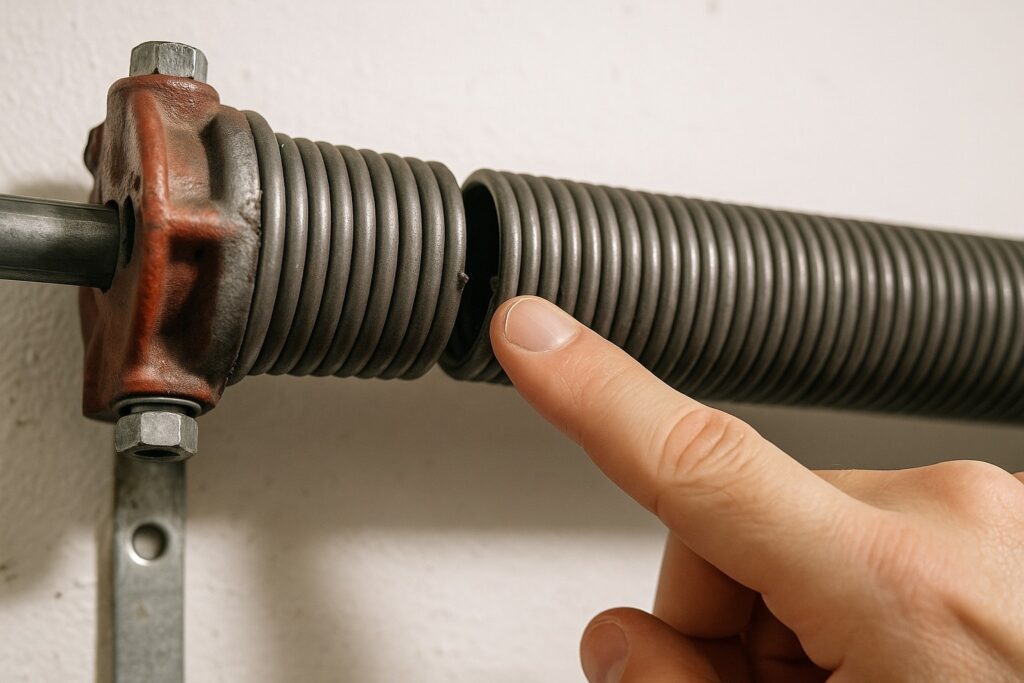
Torsion springs above the door should look tight and evenly coiled.
Look for:
- A visible gap. That means the spring snapped.
- Rust or stretch marks.
- Uneven coil spacing.
- Extension springs at the sides may show excessive stretching or separation.
If anything looks off, stop. Springs are not a homeowner’s repair job.
Examine Cables and Drums
Cables should be tight on both sides. If one side is loose, it may have slipped off the drum.
Warning signs:
- Frayed strands.
- Cable rubbing against the track.
- Uneven tension.
A snapped cable can cause the door to jam or fall. We have seen this in commercial doors and warehouse doors where a bollard was hit by a car, shifting the track and cutting into the cable.
Track Alignment and Roller Condition
Stand inside the garage and angle your head along the track line.
Tracks should be vertical, parallel, and clear.
Rollers should spin smoothly.
Look for:
- Dents or bends.
- Gaps between roller and track.
- Worn roller bearings.
If the tracks are bent, do not try to hammer them back unless it is tiny and you know what you are doing. Bigger bends need professional tools and measuring.
Electrical and Opener Troubleshooting
If the mechanics are fine but the opener is acting up, advanced Garage door troubleshooting moves to the electrical side.
Remote and Wall Button Diagnostics
If the wall button works but the remote does not, the remote may need reprogramming or replacement.
If both fail:
- The opener is not receiving a signal or is in lock mode.
- Some wall buttons have a lock or vacation switch.
Opener Sensors and Wiring
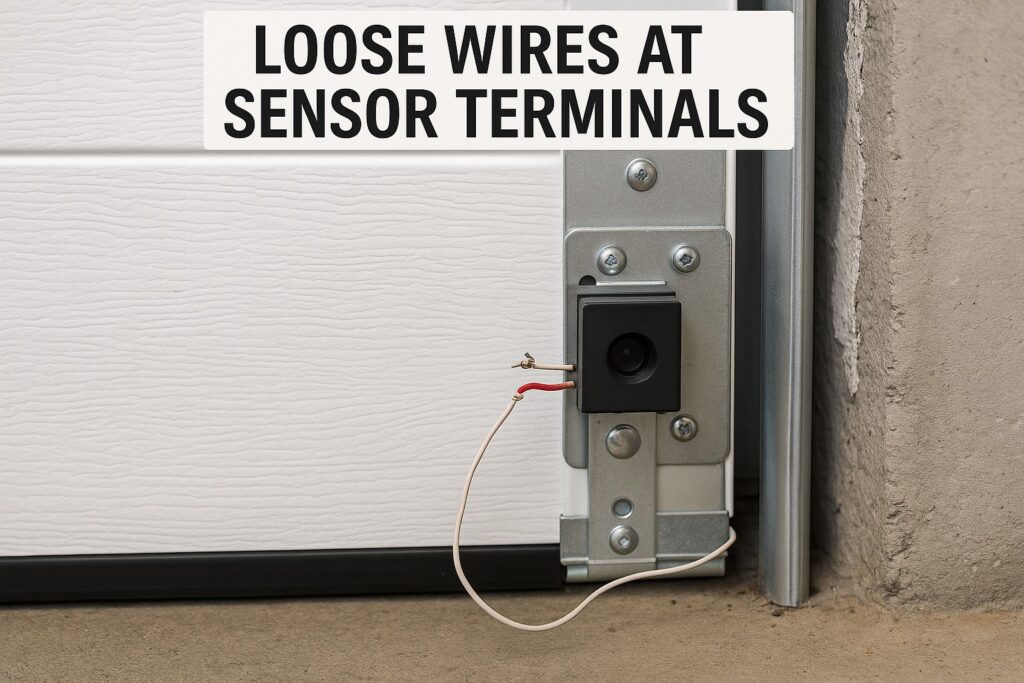
Photo eyes are easy to clean, but wiring issues are not.
Check for:
- Loose wires at sensor terminals.
- Cut wires near the base of the track.
- Moisture damage.
- A wire issue can cause random reversing or failure to close.
Travel and Force Settings
Openers measure resistance. If the force is too low, the door stops early. If travel limits are wrong, the opener thinks the door hit the floor too soon.
You can try:
- Consult your opener manual.
- Resetting travel limits.
But if the door is heavy or binding, adjusting the force is risky. It can hide the real problem and make the opener unsafe.
Logic Board and Capacitor Problems
Signs of board trouble:
- No response, even with power.
- Random clicking.
- Lights flashing without movement.
- Capacitor issues:
- Opener hums, but the motor will not start.
These are technician-level repairs.
Troubleshooting Special Situations
After a Storm or Power Surge
Plano storms can cause surges. If your opener suddenly fails after lightning, suspect:
- Blown board.
- Tripped GFCI outlet.
- Burnt capacitor.
Use a surge protector for future prevention.
When a Car Bumps the Door
Even a gentle hit can shift tracks or crack panels.
Symptoms:
- Door sticks at the hit area.
- Rollers jump track.
- Door looks bowed.
- Do not keep forcing the opener. The motor can burn out.
Commercial and Parking Garage Doors
Commercial doors in a parking garage see heavier use.
Common advanced issues:
- Worn bearings from high cycles.
- Motor overheats.
- Out-of-spec safety systems.
In these settings, inspectors often reference building code requirements, including clearance, bollard placement, and pedestrian access rules like steveray sawhorse r311.1 style standards. If a commercial door does not meet code, repairs must restore compliance.
Preventing Advanced Problems Before They Start
Advanced troubleshooting is useful, but prevention is cheaper.
Here is what we recommend:
- Monthly visual check.
- Look at springs, cables, rollers, and tracks.
- Listen for new noises.
- Test sensors.
- Place an object under the door and close it. It should reverse quickly.
- Lubricate twice a year.
- Use proper garage door lubricant, not grease.
- Schedule a yearly tune up.
- Our trained technicians check tension, alignment, opener settings, and safety.
- Upgrade old parts.
- Older doors may not be Energy Star-insulated or may have outdated openers. Upgrading improves performance and lowers energy loss.
- Keep tracks clean.
- Dust, peach colored clay from yards, and debris can build up.
Real World Example From Our Plano Service Calls
A homeowner called us saying their door was reversing and making a popping sound. They had tried cleaning the sensors and resetting travel limits. No luck. When we arrived, we found a cracked hinge and a roller that had flattened on one side. The door was binding at the same spot every time, and the opener thought it had hit an object.
We replaced the hinge, swapped rollers, aligned track spacing, and did a full balance adjustment. The door then moved quietly like new.
This is why basic fixes sometimes fail. The problem was mechanical wear hidden under a symptom that looked electrical. Advanced troubleshooting connects those dots.
In a way, it is like an online resource community. A moderator, like a sawhorse ice moderator, might remind members to search the forum before posting. But if a post is still confusing, you need deeper discussion and support from experienced members. Your garage door works the same way. Basic steps help, but deeper inspection solves the real cause.
Common Myths That Make Troubleshooting Worse
- Myth one. If I crank up the opener force, the door will work.
Truth. That can burn the motor or cause unsafe closing. - Myth two. A squeak is normal.
Truth. It is often the first sign of wear. - Myth three. Springs last forever.
Truth. Most springs are rated for about 10,000 cycles, which can be seven to ten years for many families. - Myth four. If it works sometimes, it is fine.
Truth. Intermittent issues are often wiring, alignment, or early mechanical failure.
When to Stop Troubleshooting and Call a Pro
- Call a professional service if:
- The door is off track.
- You see a broken spring.
- Cables are frayed or hanging.
- The door is very heavy to lift.
- There is a burning smell from the opener.
- You hear a loud bang from above the door.
Your safety matters more than saving a service call. Many homeowners who push too far end up with worse damage and higher repair costs.
Frequently Asked Questions (FAQs)
1. Why does my garage door work fine in the morning but struggle later in the day?
Temperature changes can make metal parts expand and tighten, especially in hot Plano afternoons. That extra friction can reveal weak springs, stiff rollers, or a motor that is already worn down.
2. How much do advanced garage door repairs usually cost in Plano?
Costs depend on the part and the door type. Bigger repairs like spring or opener replacement can cost a few hundred dollars, while track or panel damage may cost more if multiple parts need labor and alignment.
3. What should I do if my garage door will not open during a power outage?
Use the emergency release cord to switch the door to manual mode, then lift slowly with both hands. If the door feels too heavy or will not stay up, stop right away because that points to a spring problem, not the outage.
4. Why is my smart garage door opener showing as offline even though the door still opens?
Most of the time it is a Wi Fi signal or app sync issue, not a motor problem. Restart the router and the opener, then reconnect through the app settings; if it keeps happening, the opener may need a firmware update or a new network module.
Final Thoughts
Garage door troubleshooting can feel frustrating, especially when basic fixes do not work. But your door is giving you clues through symptoms like stopping, reversing, shaking, or loud noises. Advanced troubleshooting means checking the full system, including balance, springs, cables, tracks, rollers, and opener electronics. The biggest lesson is that safety comes first. High-tension parts like springs and cables are not DIY repairs. Regular maintenance, lubrication, and yearly inspections prevent many of these breakdowns, saving money and stress over time.
If you are ever unsure, it is better to pause and get expert help. A reliable garage door should protect your home, support your daily routine, and run smoothly for years. With the right care and the right team, it will.
How Can Rayburn Garage Doors Co. Help You?
When advanced Garage door troubleshooting points to a serious issue, you do not have to handle it alone. Rayburn Garage Doors Co. is your trusted Plano team for fast, safe, and high-quality garage door repair, installation, and maintenance. Whether you are dealing with broken springs, malfunctioning openers, damaged panels, misaligned tracks, or a door that will not budge, our trained technicians have the tools and experience to fix it right the first time.
We proudly serve Plano, TX, and nearby areas, including homes, businesses, warehouses, and parking garage facilities. We believe in public thanks to the community that trusts us, and we work hard to keep that support thriving through honest service and top results.
Contact us today for expert help and a clear solution.
Rayburn Garage Doors Co.
4600 TX 121, Plano, TX 75024
Phone (469) 414 3265
Let us restore your door’s safety, smooth operation, and peace of mind.
- Advanced Garage Door Troubleshooting: When Basic Fixes Don’t Work
- The Cost of Ignoring Garage Door Repairs: What Homeowners Should Know
- How to Choose Reliable Automatic Garage Doors in Plano, TX
- How to Find Reliable Garage Door Opener Repair Services in Plano, TX
- How to Find Reliable Garage Door Tune-Up Services in Plano, TX